 Introduction:
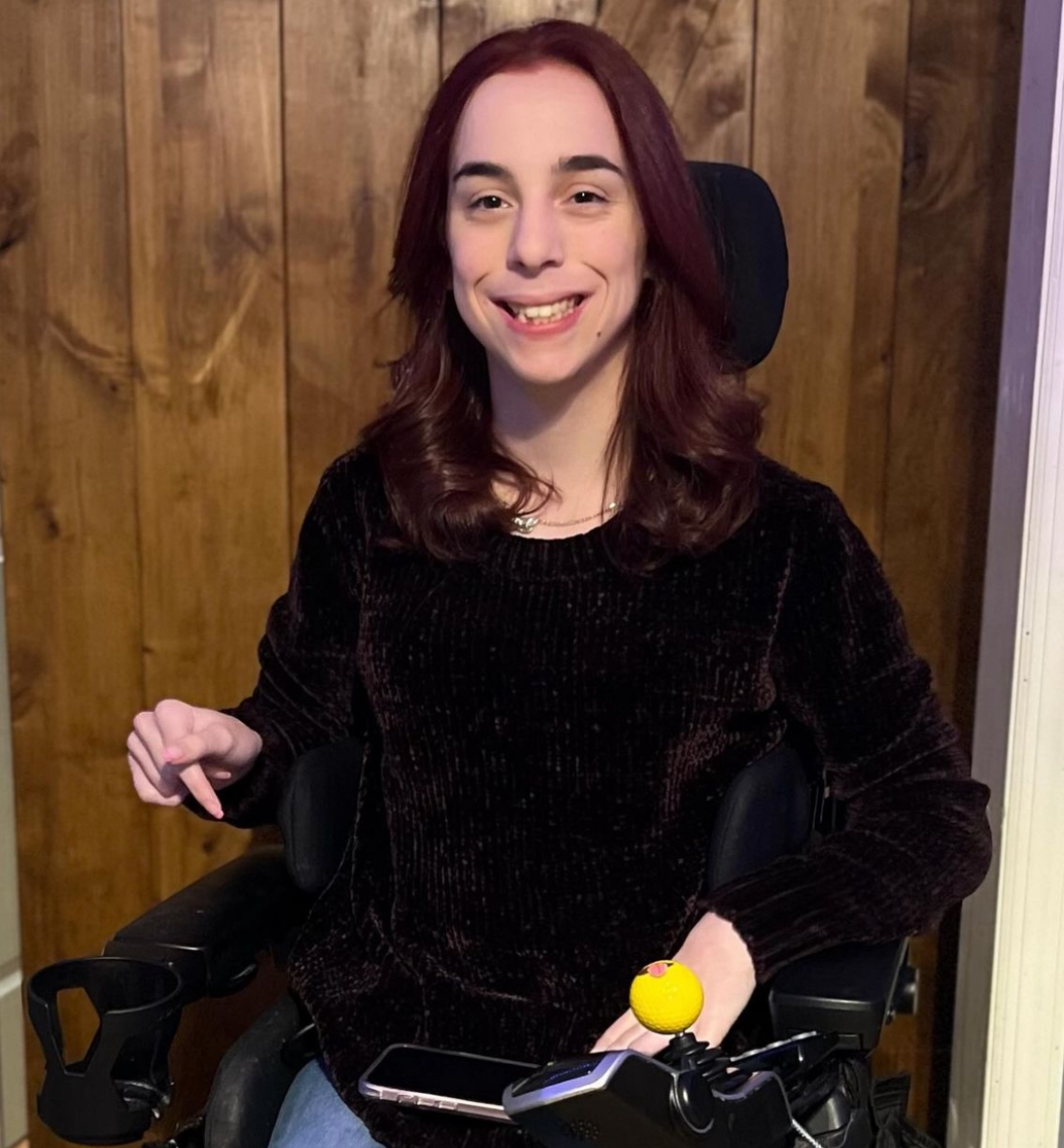
Rachel is a young adult who describes herself as a social person who likes to connect to the community. She likes to spend her leisure time listening to books, hanging out with friends, and going to concerts. Rachel recently began working at the Institute for Community Inclusion (ICI) as a disability
advocate
advisor. She supports people with intellectual and developmental disabilities (IDD) to engage with ICI’s projects, and she helps project staff design and distribute materials in plain language. Rachel realized in college that she wanted to become an advocate for people with disabilities, and she believes that her current job is a step toward reaching that goal.
What’s Important:
Rachel grew up in New Jersey in a supportive family who advocated for her to be included as much as she wanted to be in everything. People would often ask her to give them her feedback on how she experienced things and what she needed as a person with cerebral palsy, but she was afraid to respond. During Rachel’s high school years, she and her family explored options for what she would do next and focused on opportunities to build her self-advocacy skills.
After high school, Rachel joined a 2-year program for transition -age students with IDD near her home. Rachel and her family hoped the program would be a first step toward gaining more independence before enrolling in college. While enrolled in the program, Rachel encountered some challenging situations getting around, taking classes, and interacting with some people at school. In the face of such challenges, Rachel learned not to be pressured to accept what others felt were the best solutions for her.
A supportive teacher encouraged her to take steps to address one of the problems on her own terms. In this case, the teacher knew that Rachel had some fears about calling a person who could help her, and that Rachel was uncertain about how the situation could be resolved. But she encouraged Rachel to make an appointment to explain her perspective and what she needed.
“I didn’t know what was going to happen, the outcome of that whole situation and what it was going to be, but ultimately that led me to begin advocating for myself. And the teacher that was supporting me behind that phone call, she was like: ‘The only person that is holding you back right now is yourself. No one else is holding you back from this. The only thing you need to do ultimately is believe in what you want. And that will further you for what you need to do.’”
This first experience advocating for her needs boosted Rachel’s confidence.
Rachel went on to complete her studies at Turning Point, a 2-year professional certification program for students with IDD through Bergen Community College. As part of Turning Point, students take college-level courses and participate in other extracurricular and social activities on campus with the rest of the student population. Rachel received supports as needed to take her classes and exams and participate in the college community. She followed her schedule on her own and took responsibility for letting people know if she needed supports or accommodations. Despite the design of the program, Rachel needed to continue to advocate with school administrators who felt that some course requirements for graduation might be too challenging for her to participate in or that accommodations could not be made. Rachel particularly enjoyed her psychology courses and discovered that she preferred assignments where she got to work with people instead of researching and writing papers.
Eventually, Rachel organized everything she learned from herself advocacy experiences into a 45-minute presentation she could give to community groups. Rachel used this presentation to tell her story along with other self-advocate speakers in a video produced by a local center for independent living. Rachel also had an interest in working with small children and possibly becoming a teacher, and she explored that interest by giving her advocacy presentation to children in classroom settings. She enjoyed sharing her perspective as a person with a disability with these children who didn’t know much about people with disabilities. Most of all, she felt proud to have contributed in this way to their education.
Toward the end of college, Rachel began working with New Jersey’s vocational rehabilitation (VR) agency to find a good job match . From the beginning of her job search, she was committed to finding the right job for herself and communicated that she would not accept anything less than exactly what she believed would be the right job. Rachel found that she was being compared to other students who had obtained the professional certification, and that people assumed she shared their employment goals. Consequently, she was being steered toward office jobs that did not fit with her vision of how she could be an advocate. However, Rachel persisted in explaining that she wanted to work directly with others and use her experiences to help people who may not yet be able to advocate as easily as she could.
Unfortunately, VR continued to offer Rachel very limited employment possibilities, so she chose to find employment a different way. She worked with a direct support professional (DSP) to look for a job that would be a better fit for her goals. She found out about her current job at ICI by networking with a coworker she knew from her internship, and the DSP helped her through the process of applying and interviewing for the job. Her DSP continues to support her on the job as needed. Rachel and the DSP reflect on how each week has gone, review upcoming assignments, and assess the quality of her work environment. The DSP also helps Rachel communicate with her supervisor as needed.
What Happened:
Rachel currently works part time at ICI as a disability advocate advisor. “As a disability advocate advisor, I support staff across ICI and their advisory boards to help create better materials for their projects,” she says. “I really enjoy working for ICI.” Rachel started her job recently, but she is already contributing her ideas and support to much of ICI’s work. She is also excited by the opportunity to learn about topics related to integrated employment and services she had not known about before.
Looking back, Rachel acknowledges that her previous experiences were challenging but worthwhile in the end. Sometimes when Rachel gave her presentation, she had difficult moments when people would tell her they felt bad for her because of her disability or asked personal questions about how she got through difficult days. But rather than looking at what people believe she may have been limited from doing, Rachel focused on what advocating for herself had allowed her to do, and what she might do next. Rachel thinks of advocacy as an opportunity to share her perspective and to make her community better and more understanding.
“I look back and I say how lucky I am to be doing what I’m doing today. If it weren’t for all the advocacy and fighting I’ve had to do, I wouldn’t be here as a staff member [at ICI] today.”
Lessons Learned:
Build your advocacy skills one experience at a time. Rachel did not acquire her advocacy skills overnight. It was a journey that started by making one phone call to advocate for her needs, with encouragement from a supportive teacher. Each self-advocacy experience boosted Rachel’s confidence to the point where she sought out speaking engagements to advocate for people with disabilities.
Self-advocacy can open many doors. One of the key benefits of Rachel’s strong self-advocacy skills is the opportunities that come with knowing what she wants and being able to reach toward it! Many opportunities only became available after Rachel began to speak out. Her experiences also prepared her to become an advocate for other people with disabilities and begin a career in advocacy.
Pay attention to what people with disabilities say they want in a job or career. People with disabilities have a high unemployment rate, but the solution is to help them find what they want to do. Instead of limiting their options or comparing them to other people with similar disabilities or work histories, allow job seekers to communicate about their experiences and how they developed their work interests.