Access to Integrated Employment
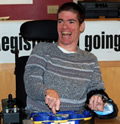 Cody is a young man who wanted to work with children in the field of sports and recreation. Cody has reported challenges to obtaining such a position, including no prior experience, use of a motorized wheelchair for mobility, and limited speech. To overcome these barriers, Cody and his employment support staff developed, marketed, and adapted a new position as a greeter at a local YMCA.
 Conversion to Integrated Employment: Case Studies of Organizational Change, Volume 2
The decision to close a facility-based program requires courage and a willingness to take concrete and often risky steps toward that goal. As more organizations develop strategic plans that include the goal of closing a facility-based program, it is our hope that these summaries will provide both guidance and the determination to take substantive steps in the change process. This volume summarizes the themes that were repeated across the experiences of these organizations.
Conversion to Integrated Employment: Case Studies of Organizational Change, Volume 1
These three case studies are part of a larger study of six organizations that have closed a sheltered workshop or a nonwork, segregated program and replaced it with integrated employment or other integrated, community-based activities for individuals with disabilities. The organizations vary with respect to size, geographic location, and the characteristics of persons receiving supports.
Conversion to Integrated Employment: Case Studies of Organizational Change, Volume 3
Continuing the expansion of integrated employment opportunities requires a clear understanding of the organizational and systems factors that influence change and expand access to integrated employment. This monograph will focus on change at an organizational level in four organizations that were engaged in a change process during 1998 and 1999.
StateData: The National Report on Employment Services and Outcomes
2016 Edition
Access the latest information about employment and economic self-sufficiency for people with intellectual and developmental disabilities. Both national and state-level statistics are included.
Data Note: Reasons for Exiting VR Services Without Employment
Only 23% of adults with intellectual disabilities work, compared to 73% of people without disabilities (statedata.info). To bridge this gap, the vocational rehabilitation (VR) program offers valuable services including assessment, job search assistance, and counseling. In FY 2014, over 46,000 adults with intellectual disabilities exited the national VR program. About 38% of them reported an employment outcome.
Flexible Scheduling and Creative Staffing: KFI’s Support Solutions
Headquartered in a small rural town in northern Maine, Katahdin Friends, Inc. (KFI) provides community employment and life engagement supports, as well as home supports, to individuals with intellectual and developmental disabilities (IDD). A flexible approach to staffing and support scheduling helps KFI ensure customized daily support schedules that meet individual goals. This approach also allows individuals to interact with a variety of direct support professionals, which is important for having a more engaged and meaningful life in the community.
Using Mobile Communication Technology at SEEC
SEEC (Seeking Equality, Empowerment, and Community) is a Maryland-based provider of employment, community living, and community development supports to people with intellectual and developmental disabilities (IDD). Because SEEC has no central facility, having ways to maintain contact between staff and management is paramount. From prepaid cell phones in 2005 to outfitting every staff member with a tablet or a laptop today, SEEC has embraced mobile communication since it started its conversion.
StateData: The National Report on Employment Services and Outcomes
The 2015 National Report on Employment Services and Outcomes provides national and state-level statistics spanning a 20-year period. Its sources include several data sets that address employment outcomes and economic self-sufficiency for people with intellectual and developmental disabilities.
Download the full 2015 report here or click on the thumbnail image.