Frankie is a 21-year-old man who lives in Haworth, Oklahoma. His interests include rescuing animals and caring for his 11 dogs. With the help of his service coordinator from the Developmental Disabilities Services Division, Frankie was able to offer his employer payment for 12 months of on-the-job supports. Frankie works from 6:30 in the morning to 3:30 in the afternoon every Monday, Tuesday, Thursday, and Friday for the City of Idabel.
Nicole currently works part-time as a classroom assistant at a child-care center. Her goal is to develop and advance a career in childcare and to work at the center full-time. Nicole is using multiple paths to advance in her chosen career field. A volunteer opportunity is allowing her to gain more experience in the field, a second job is readying her for a fuller schedule and contributing to her overall income, and continuing education is preparing her for the necessary certifications.
Miranda loves children and is also interested in helping other people with disabilities. She provides childcare during the school year at the Brookline Early Education Program in Brookline, Massachusetts. Because of Miranda's strong interest in childcare and the employer's inclusive philosophy, her job developer approached the employer with the idea of creating a meaningful job.
Reid was one of the first people hired through the Work Independence Network (WIN)* pilot project. Reid has great social skills but limited communication skills. Prior to becoming involved with the pilot project in 2004, he was deemed "unemployable" by administrators in the school and vocational rehabilitation systems. Thanks to his own initiative and to some creative thinking by his job developer and job coach, Reid now works approximately 16 hours per week at the Rehabilitation Clinic at Harrison Hospital, where he cleans equipment, maintains the pool, play, and therapy areas, and stocks linens.
Ashley is a woman who likes helping other people with disabilities.Ashley works part-time as a researcher at the Institute for Community Inclusion. What is Ashley’s story:
Ashley heard about an available research job on a project team studying how people with disabilities make choices about work.
Ashley applied and got the position. She worked with a mentor to learn all about the job.
When she had finished work on the project, she had learned to do many different research tasks.
Ashley was offered more project work and continues to work there part-time.
Eric lives in Seattle, Washington and has always been interested in the difference people make if they vote and advocate for the issues they care about. He has worked since 2010 as an advocacy and outreach specialist for the Arc of King County. The Arc is a non-profit organization that supports individuals with intellectual and developmental disabilities (IDD) and their families to live, work, and play in their communities. Eric's leadership skills and the support he receives on the job help him to handle a busy schedule and many responsibilities.
Allison has worked at Crate & Barrel, a retail store selling furniture and houseware, for over six years. Allison’s employment support staff has used a variety of strategies to foster a good relationship with Allison and her employer over the years. The match between Allison and Crate & Barrel was effective due to positive communication and combined supports from both co-workers and her supported employment staff.
Carrie works in the kitchen of a small private school. This is her first job in the community. She enjoys reciprocal, caring relationships with several of her coworkers. The natural support of her colleagues has enabled her to be successful at her job and form friendships that extend beyond the workday.
Melissa lives in Montana, and loves dogs. She owns and operates Lissie's Luv Yums, a gourmet dog-biscuit business. Melissa also educates others about employment for people with disabilities and about living with and preventing fetal alcohol spectrum disorder (FASD).
Emilea lives in a small town in Iowa. She loves spending time with her family and her pets, CeCe and Harley. She also owns and operates her own coffee shop, Em's Coffee Company. With the support of her family, Emilea planned for a career and then used local contacts and several funding streams to start her own business.
 Frankie is a 21-year-old man who lives in Haworth, Oklahoma. His interests include rescuing animals and caring for his 11 dogs. With the help of his service coordinator from the Developmental Disabilities Services Division, Frankie was able to offer his employer payment for 12 months of on-the-job supports. Frankie works from 6:30 in the morning to 3:30 in the afternoon every Monday, Tuesday, Thursday, and Friday for the City of Idabel.
 Nicole currently works part-time as a classroom assistant at a child-care center. Her goal is to develop and advance a career in childcare and to work at the center full-time. Nicole is using multiple paths to advance in her chosen career field. A volunteer opportunity is allowing her to gain more experience in the field, a second job is readying her for a fuller schedule and contributing to her overall income, and continuing education is preparing her for the necessary certifications.
 Miranda loves children and is also interested in helping other people with disabilities. She provides childcare during the school year at the Brookline Early Education Program in Brookline, Massachusetts. Because of Miranda's strong interest in childcare and the employer's inclusive philosophy, her job developer approached the employer with the idea of creating a meaningful job.
 Eric lives in Seattle, Washington and has always been interested in the difference people make if they vote and advocate for the issues they care about. He has worked since 2010 as an advocacy and outreach specialist for the Arc of King County. The Arc is a non-profit organization that supports individuals with intellectual and developmental disabilities (IDD) and their families to live, work, and play in their communities. Eric's leadership skills and the support he receives on the job help him to handle a busy schedule and many responsibilities.
 Allison has worked at Crate & Barrel, a retail store selling furniture and houseware, for over six years. Allison’s employment support staff has used a variety of strategies to foster a good relationship with Allison and her employer over the years. The match between Allison and Crate & Barrel was effective due to positive communication and combined supports from both co-workers and her supported employment staff.
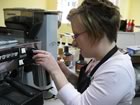 Emilea lives in a small town in Iowa. She loves spending time with her family and her pets, CeCe and Harley. She also owns and operates her own coffee shop, Em's Coffee Company. With the support of her family, Emilea planned for a career and then used local contacts and several funding streams to start her own business.