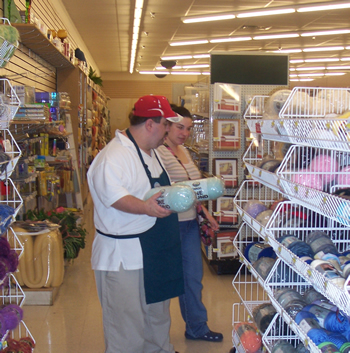
John's planning process was a combined effort of focused planning, aggressive job development, strong family advocacy, good use of personal networks, and professional collaboration; this allowed John to reach his goal of getting a job in the community. He currently works at Jo-Ann Fabrics three days per week, stocking and organizing bolts of fabric and filling bins of yarn.
Brian is a man in his 20s who loves working with animals. He was able to purchase valuable equipment with the help of his job developer and use it to negotiate with a business where he was eventually hired. Brian now works 30 hours per week as a pet groomer.
Joe describes himself as smart and friendly. He works as an administrative assistant at Hardy, Wolf and Downing, a law firm in Lewiston, Maine. He found this position with the help of Aaron, his job developer. Aaron helped Joe look for jobs that might be interesting to him, and thought about ways that Joe could help an employer. Then Aaron set up a chance for Joe to work for a specific business so they could see if the job was a good match.
Ken is a 46-year-old man who lives in Seattle, Washington. He has been a devoted Starbucks Partner at the Starbucks corporate headquarters there for the past 20 years. Ken assists with stocking 23 kitchens with teas and condiments. He also conducts weekly tea tastings for his coworkers.
Brenda is a woman in her 30s who has been working at the Fitness Plus gym for about two years. She works there twice a week, completing a list of tasks to keep the gym clean and organized, including putting away equipment. To obtain this job, Brenda’s job developer assessed the employer's needs and showed Brenda's ability to meet those needs. Together Brenda, the job developer and the employer carved out a new position.
Zachary lives in Hammond, Indiana and says he has been programming computers since he was eleven years old. For the last two and a half years, he has worked part-time for Alkon Consulting, a local web design studio. His boss met Zachary through his job developer, reviewed his work to see if he was ready to work in the web design field, and decided to hire him.
Jared works at Microtek, a cable-assembly company in Chicopee, Mass. With his family's help, he found an employer who supports his success. Jared has natural on-the-job supports from his line managers and coworkers. He reports that he and his coworkers get along well. He is expected to make his own decisions and be responsible for his own work.
Cindy has always expressed an interest in working with children. With the help of a job developer, a formal employment proposal was developed and presented to an employer, which outlined potential job responsibilities and how they would meet a business need. Through an effective and persistent job negotiation process, Cindy now works as a day care assistant in a child-care center close to her home.
Becca started with the Work Independence Network (WIN)* pilot project in 2004, and now works as an office clerk at Harrison Hospital in Washington 20 hours per week. Becca performs a wide range of tasks at the hospital. She tears down patient charts, prepares intake packets, and supports staff on clerical projects. She also makes copies and faxes documents to doctors in various departments. This job match is successful because of Becca's commitment and energy, and also because her job developer was able to engage Harrison Hospital, showing how creating a position for Becca would help to make one of its departments more efficient. Watch Becca's story here.
Jackson and Anna both live in Davis, CA, where they grew up and went to junior high school together. They have busy lives volunteering in their community, and both say that they relate well to kids.
With help from their job coaches and support teams, and with regular meetings about self-employment, Jackson and Anna were each able to explore their talents, try out business ideas, and eventually decide to become business partners.
 Brian is a man in his 20s who loves working with animals. He was able to purchase valuable equipment with the help of his job developer and use it to negotiate with a business where he was eventually hired. Brian now works 30 hours per week as a pet groomer.
 Ken is a 46-year-old man who lives in Seattle, Washington. He has been a devoted Starbucks Partner at the Starbucks corporate headquarters there for the past 20 years. Ken assists with stocking 23 kitchens with teas and condiments. He also conducts weekly tea tastings for his coworkers.
 Zachary lives in Hammond, Indiana and says he has been programming computers since he was eleven years old. For the last two and a half years, he has worked part-time for Alkon Consulting, a local web design studio. His boss met Zachary through his job developer, reviewed his work to see if he was ready to work in the web design field, and decided to hire him.
 Jared works at Microtek, a cable-assembly company in Chicopee, Mass. With his family's help, he found an employer who supports his success. Jared has natural on-the-job supports from his line managers and coworkers. He reports that he and his coworkers get along well. He is expected to make his own decisions and be responsible for his own work.
 Jackson and Anna both live in Davis, CA, where they grew up and went to junior high school together. They have busy lives volunteering in their community, and both say that they relate well to kids.